Saturday, August 29, 2015

Heroes of the Revolution Don't Surf - Reinforcements

Some reinforcements have arrived for the valiant defenders of the Motherland.


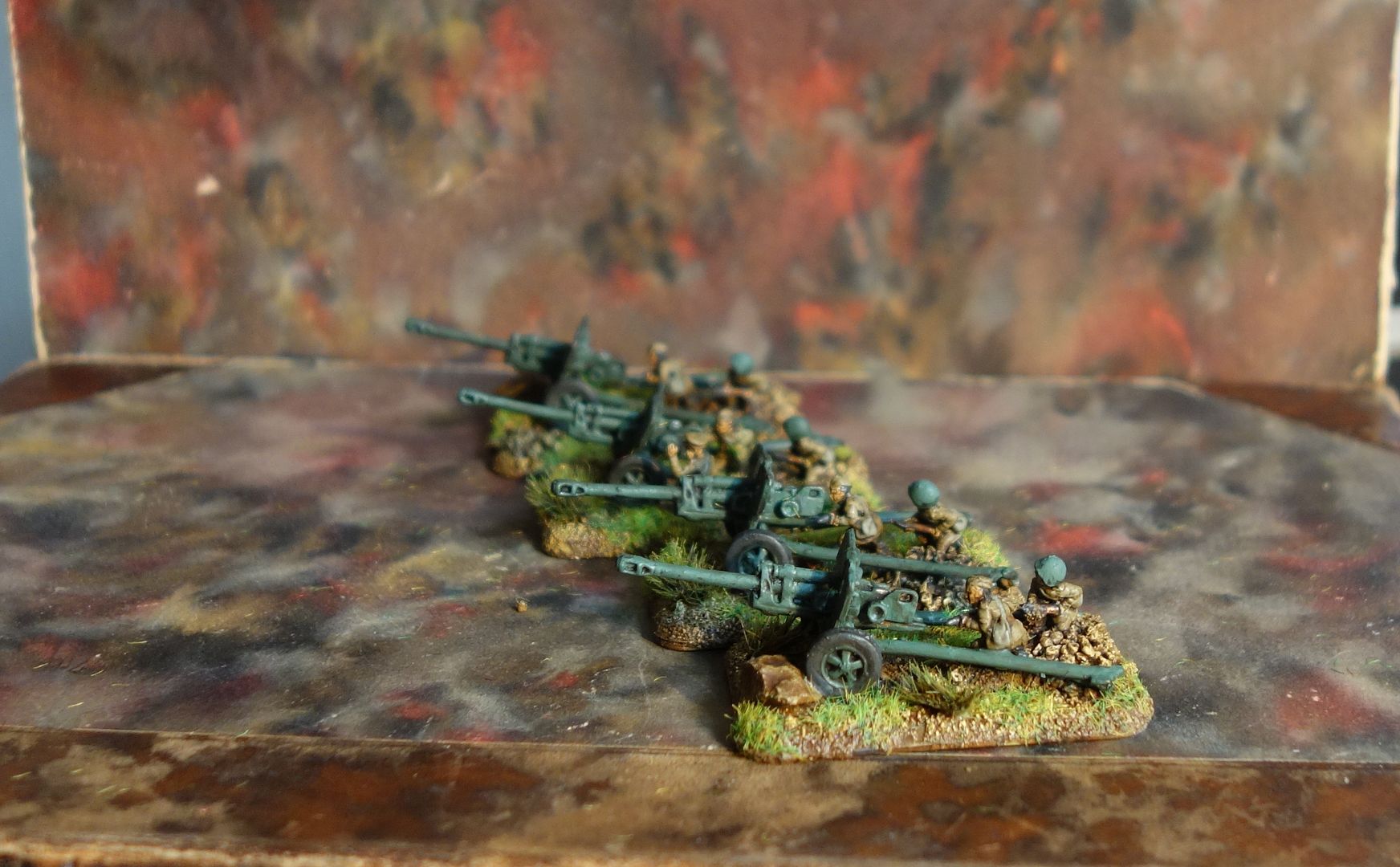
Battery of ZiS-3 Field Guns 

Field guns ready to repel the enemy
 I did a full battery of 4 guns from Battlefront. These were designed as divisional artillery but also deliberately designed to be fully usable as AT guns and used in massive numbers all through the war and beyond.
Most Soviet divisional artillery were equipped with the ZiS-3, as were many dedicated anti-tank units.

Battery of 82 BM-37 82mm Mortars

The battalion's mortar battery deployed for action. The forward observer is relaying the fire order....

I also painted a battery of 4 82mm mortars from Plastic Soldier and added a forward observer from Battlefront. These mortars were also used during the entire war, and beyond. Mortars that are almost identical are still in service all over the world.

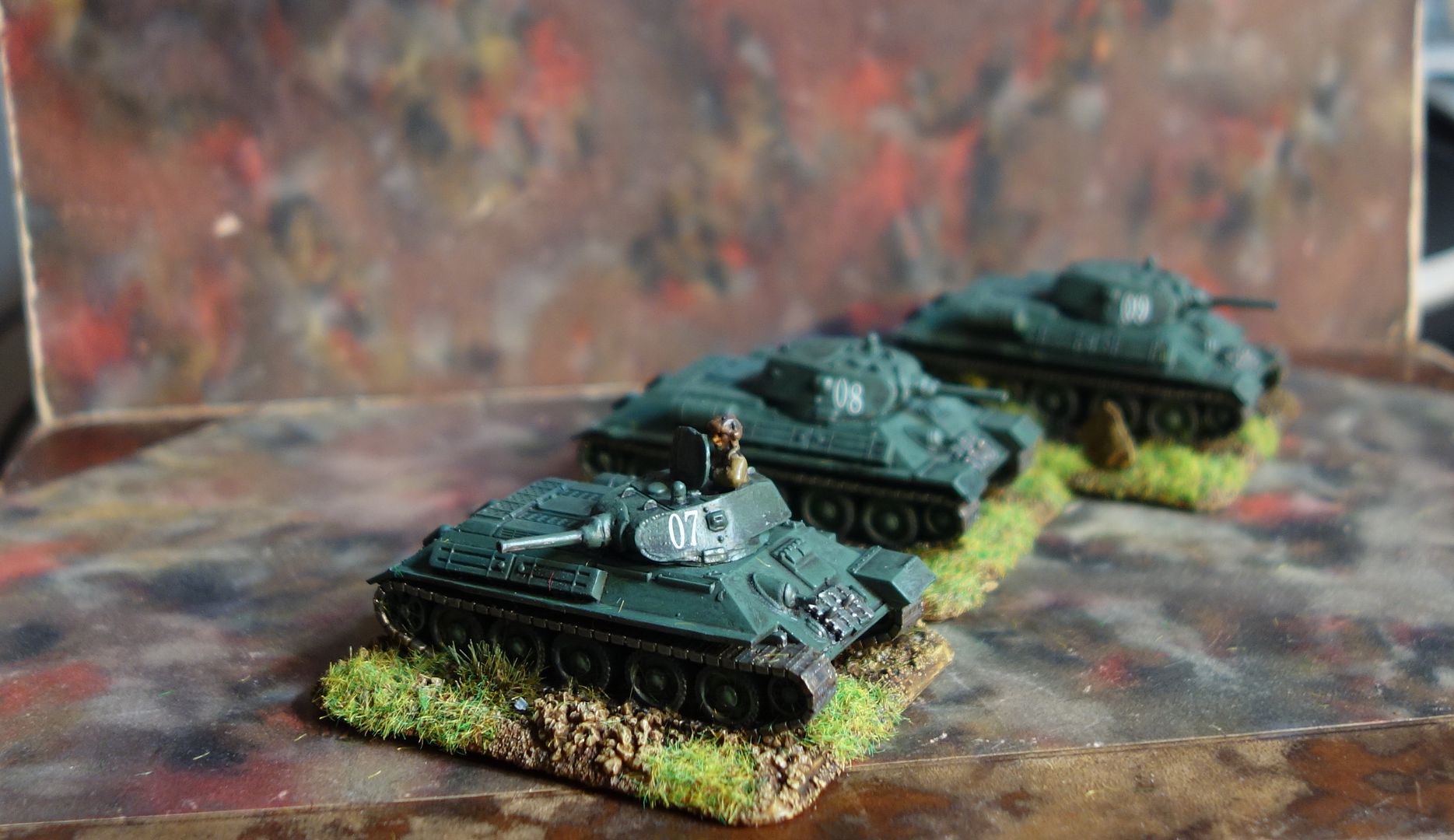
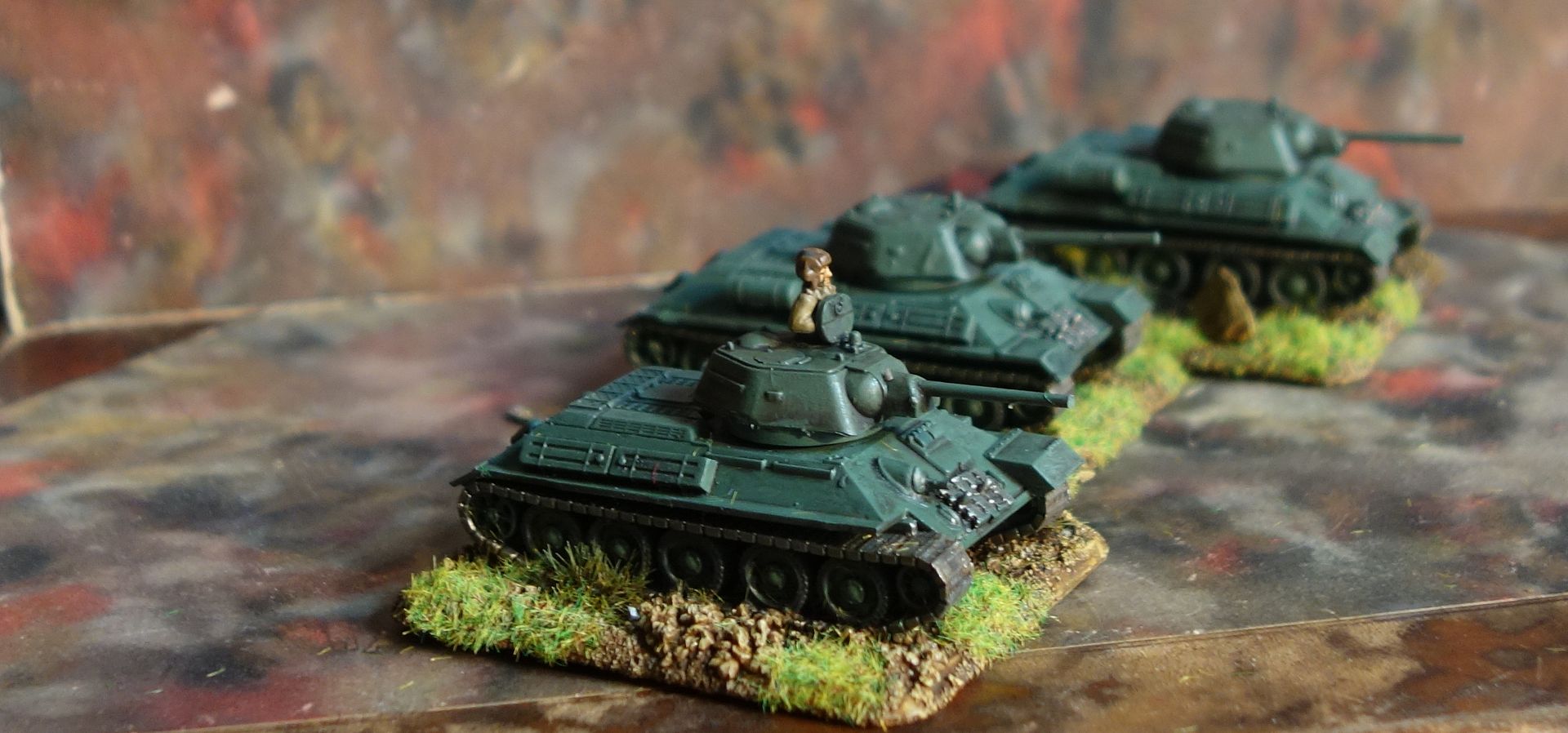
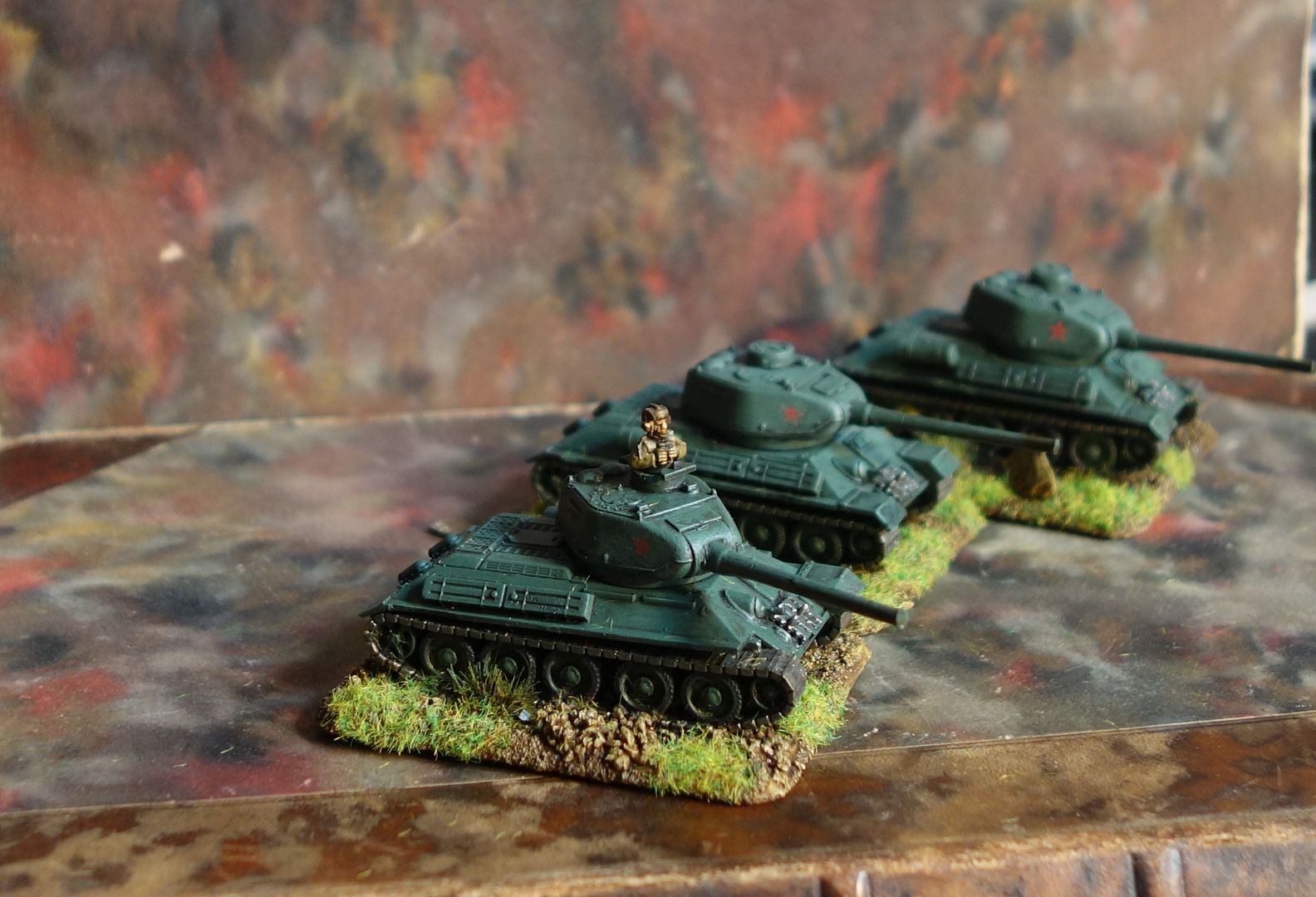
T34s

 I painted the 3 T34s from Battlefront's box of plastic early T34s. They come with several turrets, guns and various options, not just the early obr40 and obr 41 models mentioned on the box, but mid- and late war versions too..
I chose to do 3 different turrets for each tank. One corresponds to the T34/76 obr 40 model, one represents the T34/76 obr 42, and one the T34/85 obr 43. Quite good value with, in effect, 3 different tanks at the same time.
This allows me to represent almost any T34-equipped platoon from Barbarossa all the way to '45.

T-34/76 obr 40.
T-34/76 obr 42.
T-34/85 obr 43


Next on the production line: Some more Maxim HMGs, PTRD Antitank Rifles and a few GAZ trucks

Friday, August 21, 2015

Winter Stalemate in Karelia


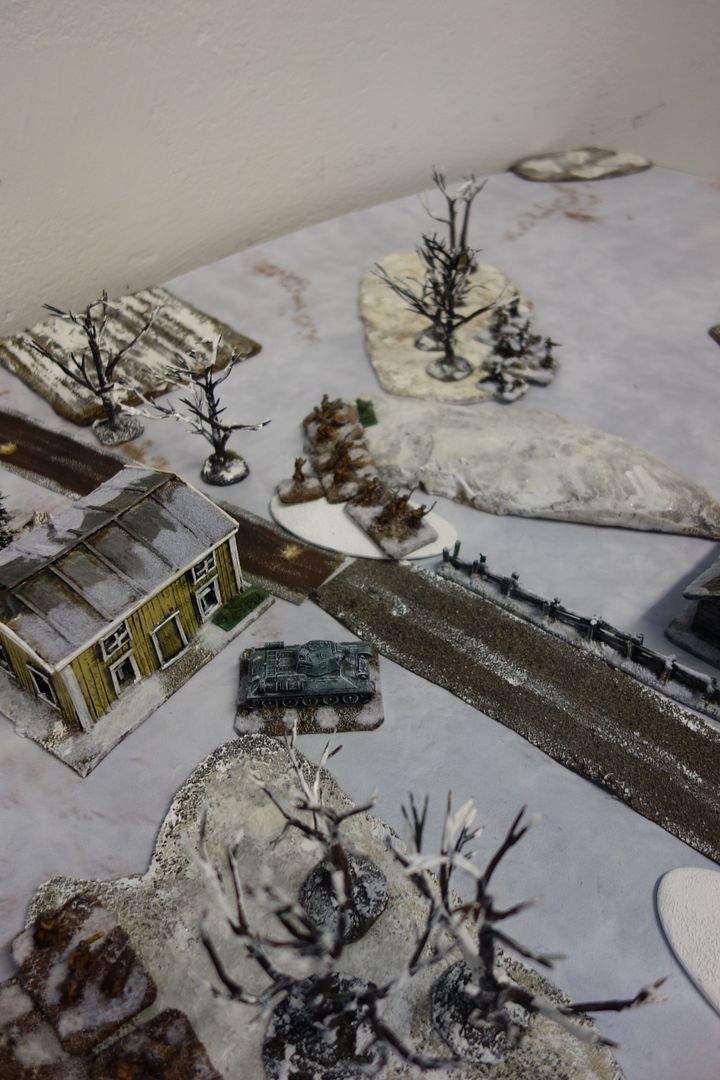
Earlier this week we had another game of Big Chain of Command set in Karelia during first winter of the Continuation War.
Myself and Jeppan were joined by fellow club member Nils who wanted to try the CoC rules. As ever, Jeppan was running the Finns while I commanded the Soviets. Nils joined the Finns and took command of their tank platoon.

Terrain 

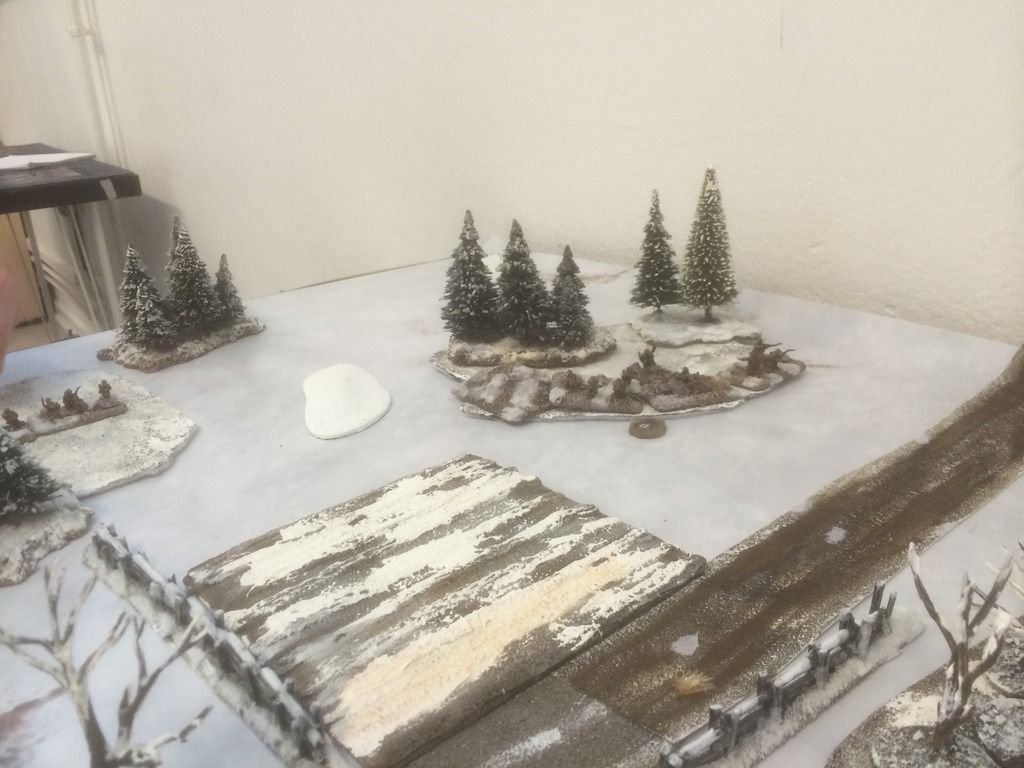
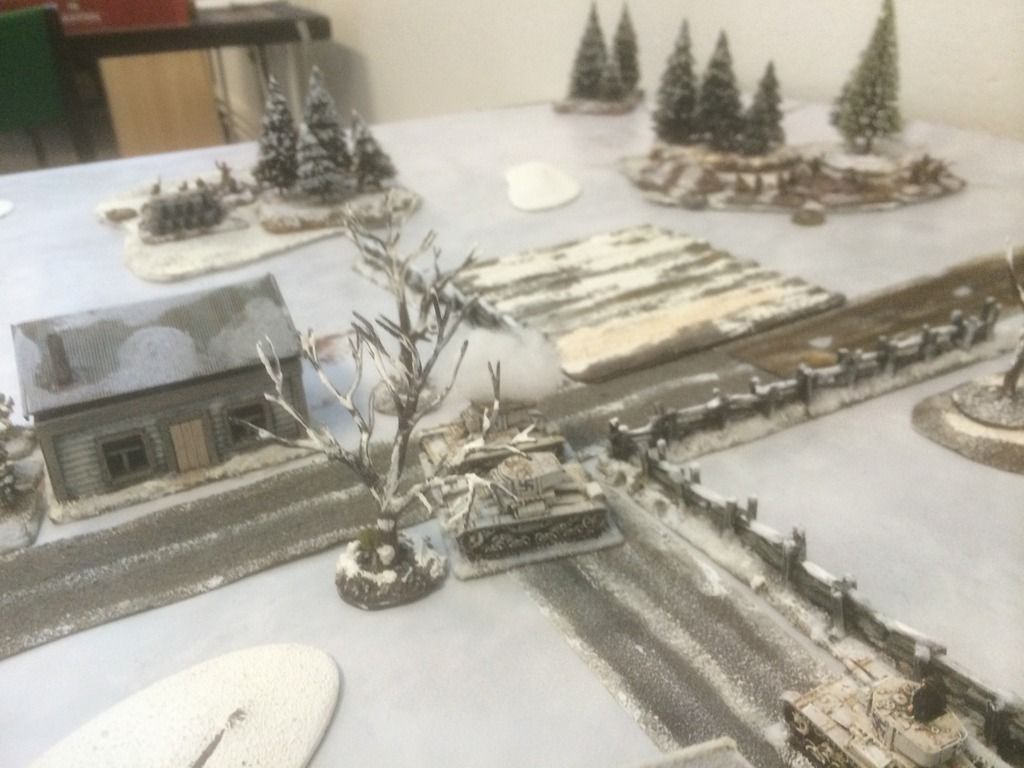
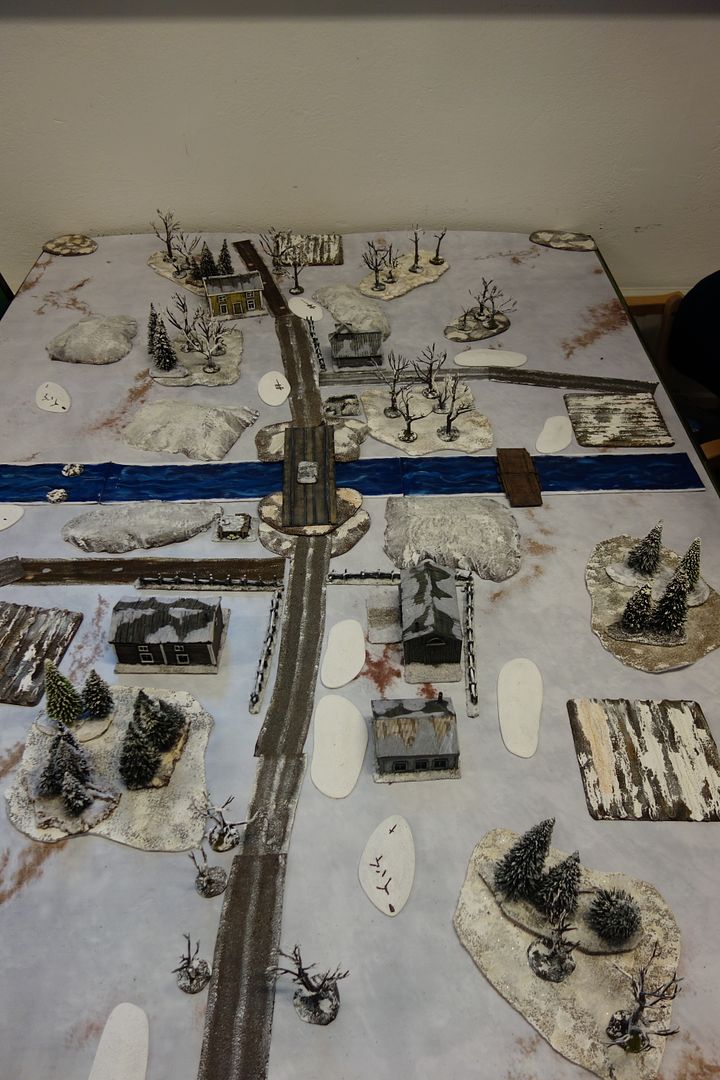
The terrain was mixed woodlands with a sprawling village in the centre of the table. Roads were running from all four sides of the table with a crossroads in the centre village.  There were a few low hills and plenty of snow drifts and some plowed fields close to the village.


Mission & Deployment

We decided to keep it simple and do an encounter scenario with the added twist that the tank platoons on both sides could choose to enter from the roads on the short table edges.

Other than that we simply entered our Patrol Markers from our respective long table edges. There were no actual terrain objectives this time and both sides had the same objective; to force the enemy to withdraw. This would give the victor control of the village and the crossroads. This seemed a reasonable mission in a sparsely populated area with limited infrastructure and terrain that limits movement of mechanised forces (lots of forests and swamps). Not to mention it's in the middle of one of our north Scandinavian winters. You really, really want some proper shelter in one of those......


Forces

Both sides had one infantry platoon and one tank platoon. We both used platoons of 5 x T-26s as this was the most common tank at this date and we did not want the game to become too centered on the tanks.
We did not roll very high for Force Support, so neither side could add that much extra stuff.The Finn tank platoon added a light armoured car (plus something else that I can't remember), while the Soviets added a Recce squad attached to the tank platoon and some AT hand grenades for the infantry platoon.


Early Game

The Soviets gained initiative and started deploying a couple of squads from the infantry platoon close to the centre village.
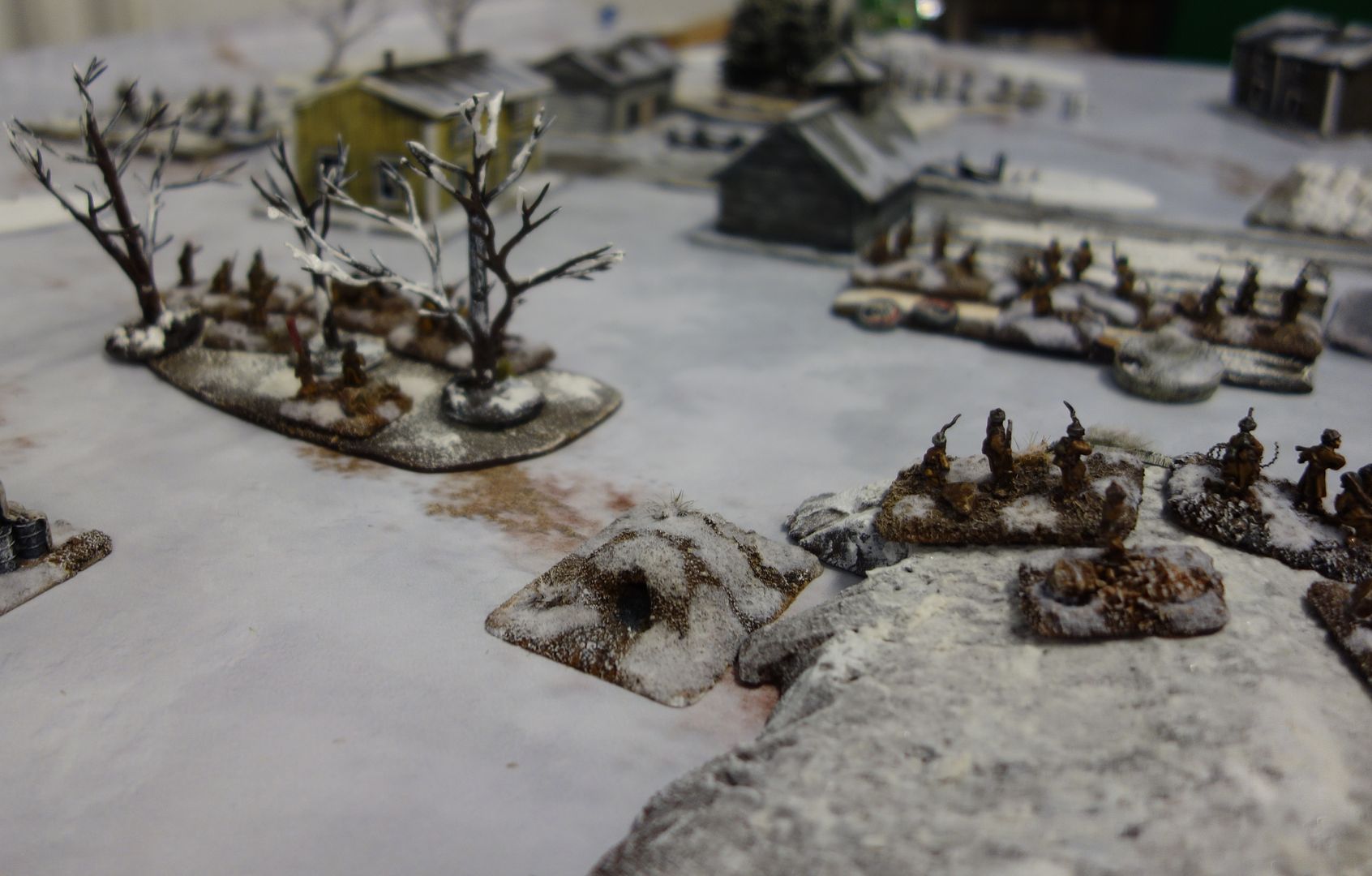
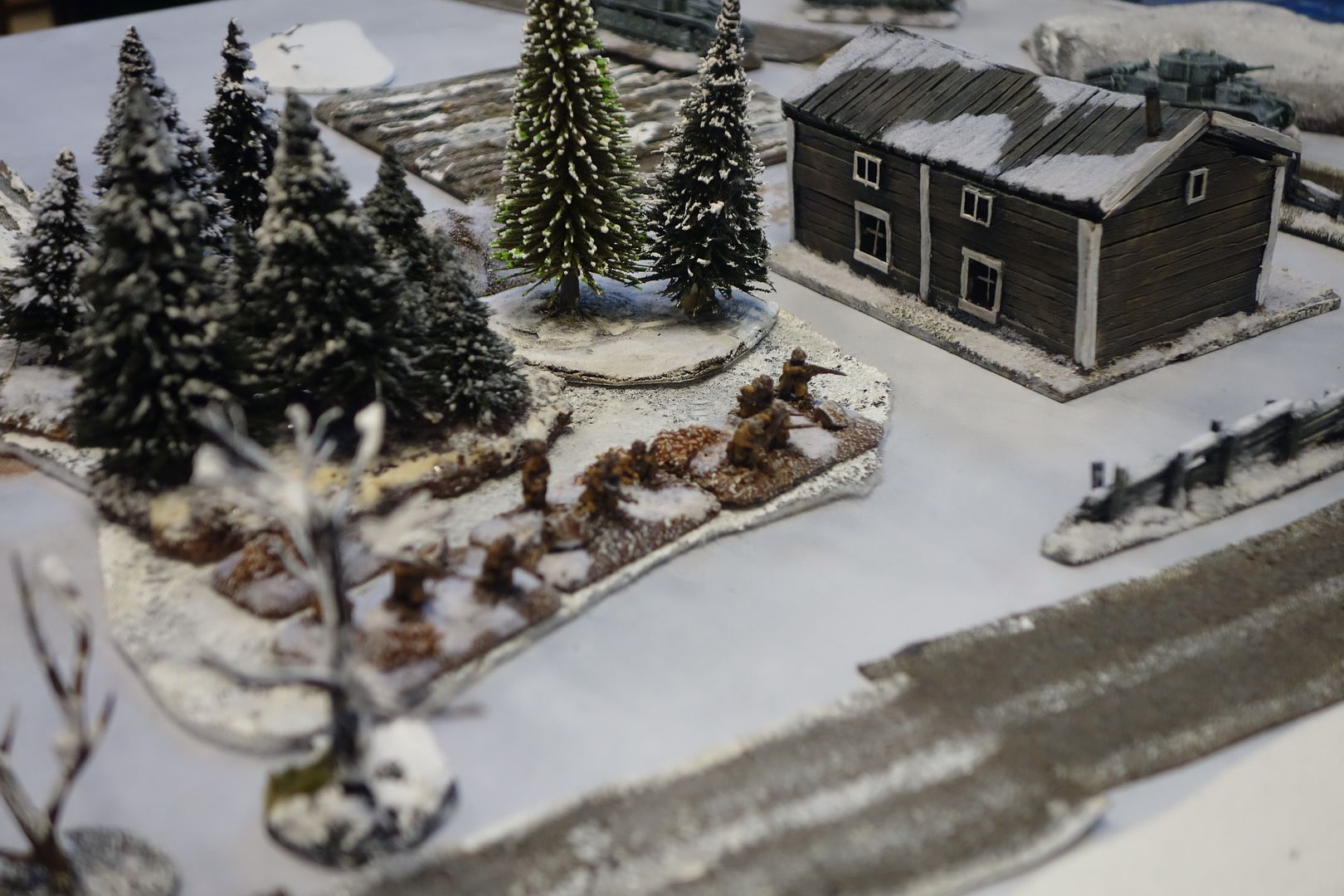
Soviet infantry move up to defend the village from counter-revolutionary Finns.


Meanwhile the Soviet tanks started to trundle onto the table from the Soviet right flank.
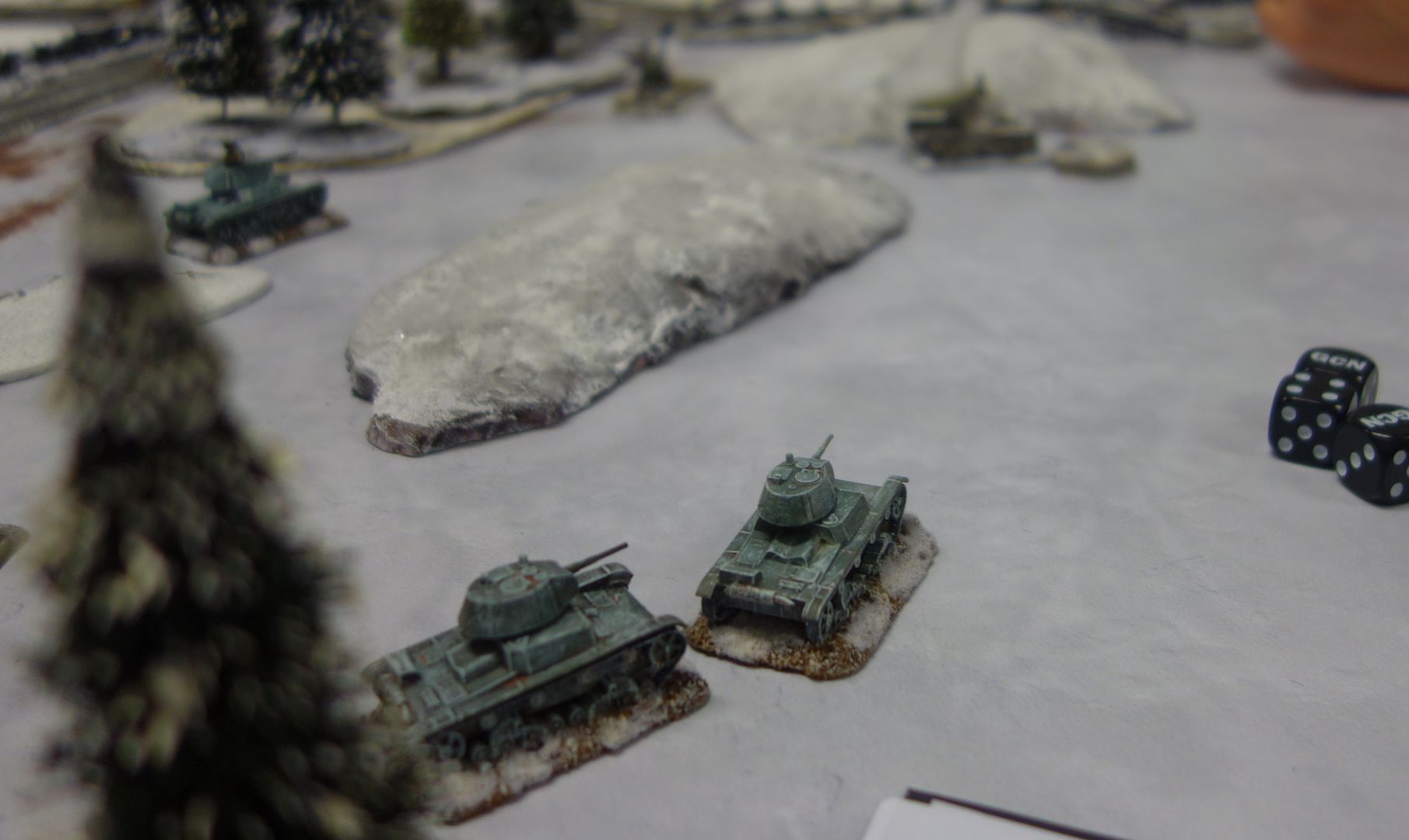
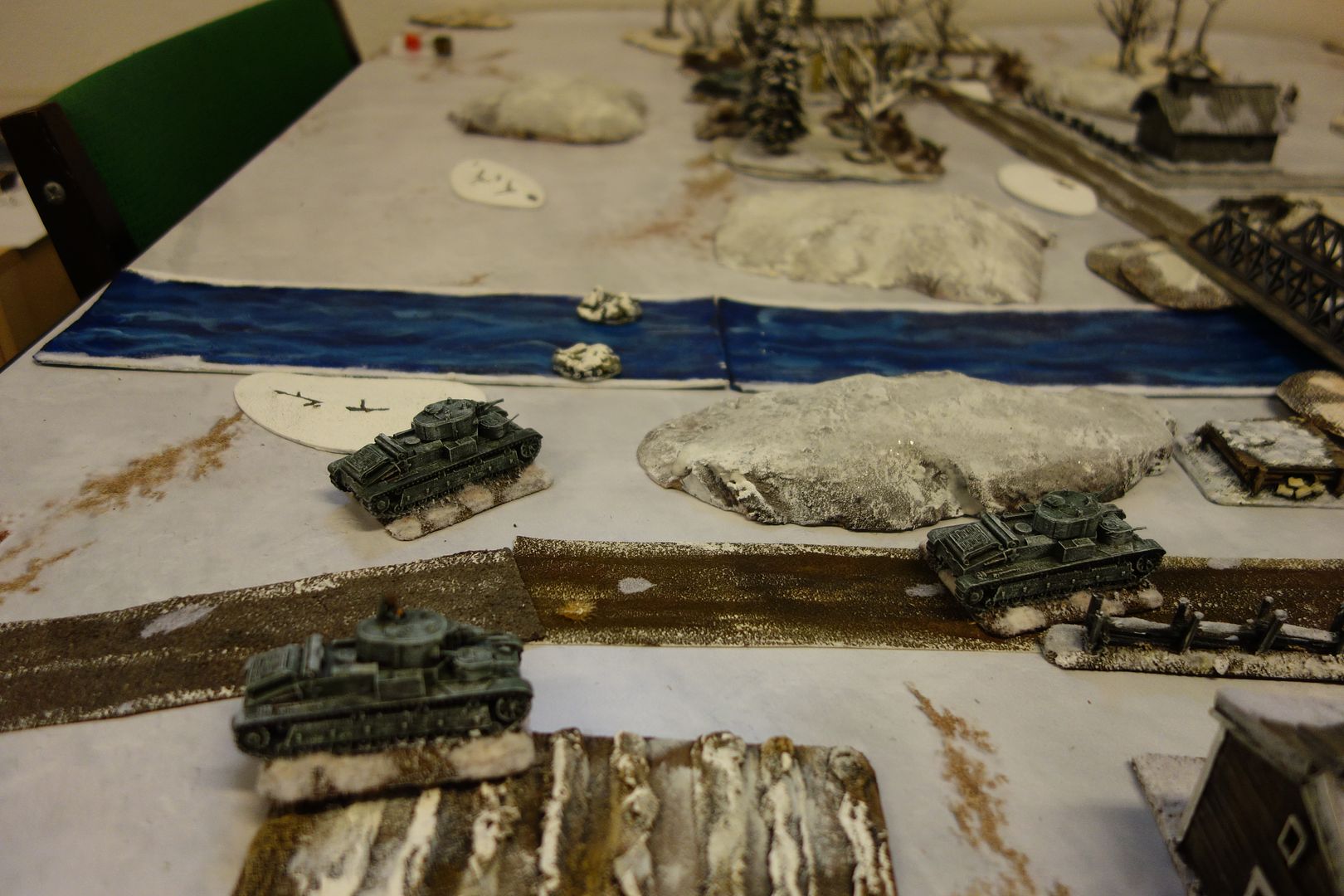
Soviet T-26s roll into action from the flank
The Finns deployed their infantry platoon opposite the Soviet infantry, and started to bring on their tanks from the centre of their long table edge. This would allow them to both support their infantry in the centre and to counter the  threat from the Soviet tanks approaching from the flank. Unortunately for the Finns, their tank platoon's command dice were not very good and their T-26s only entered very slowly and one at a time. The Soviets could use all their tanks (and their supporting infantry squad) en masse thanks to some good command dice. The Soviet tankers were also lucky to get a double-move at the right time.
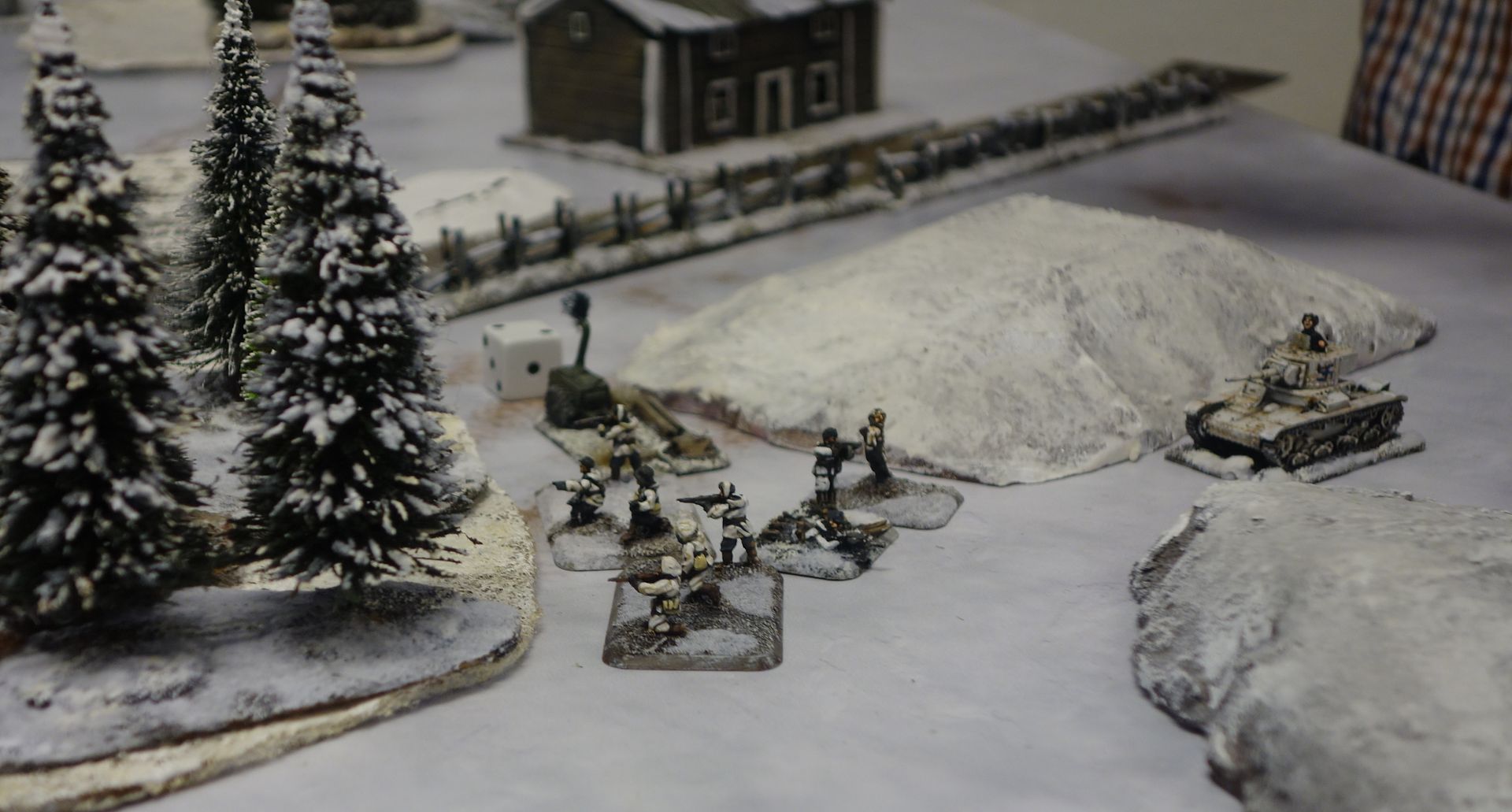
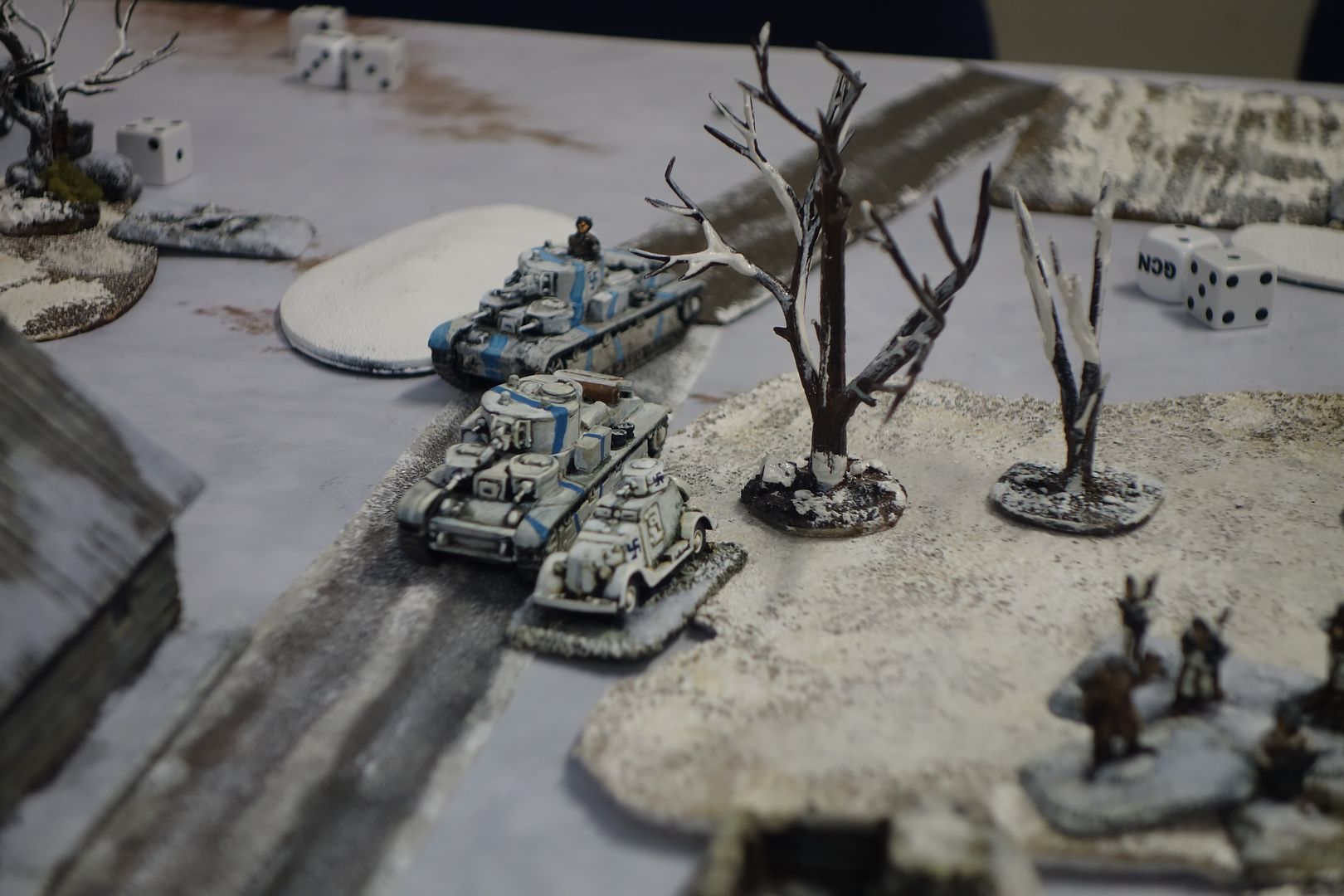
Finn infantry squad and the tank platoon command vehicle advance down the centre

 It was a different story in the village, though. The Finn infantry is very good and also very flexible. The Soviets have reasonable quality too, but their platoon is not at all as flexible.
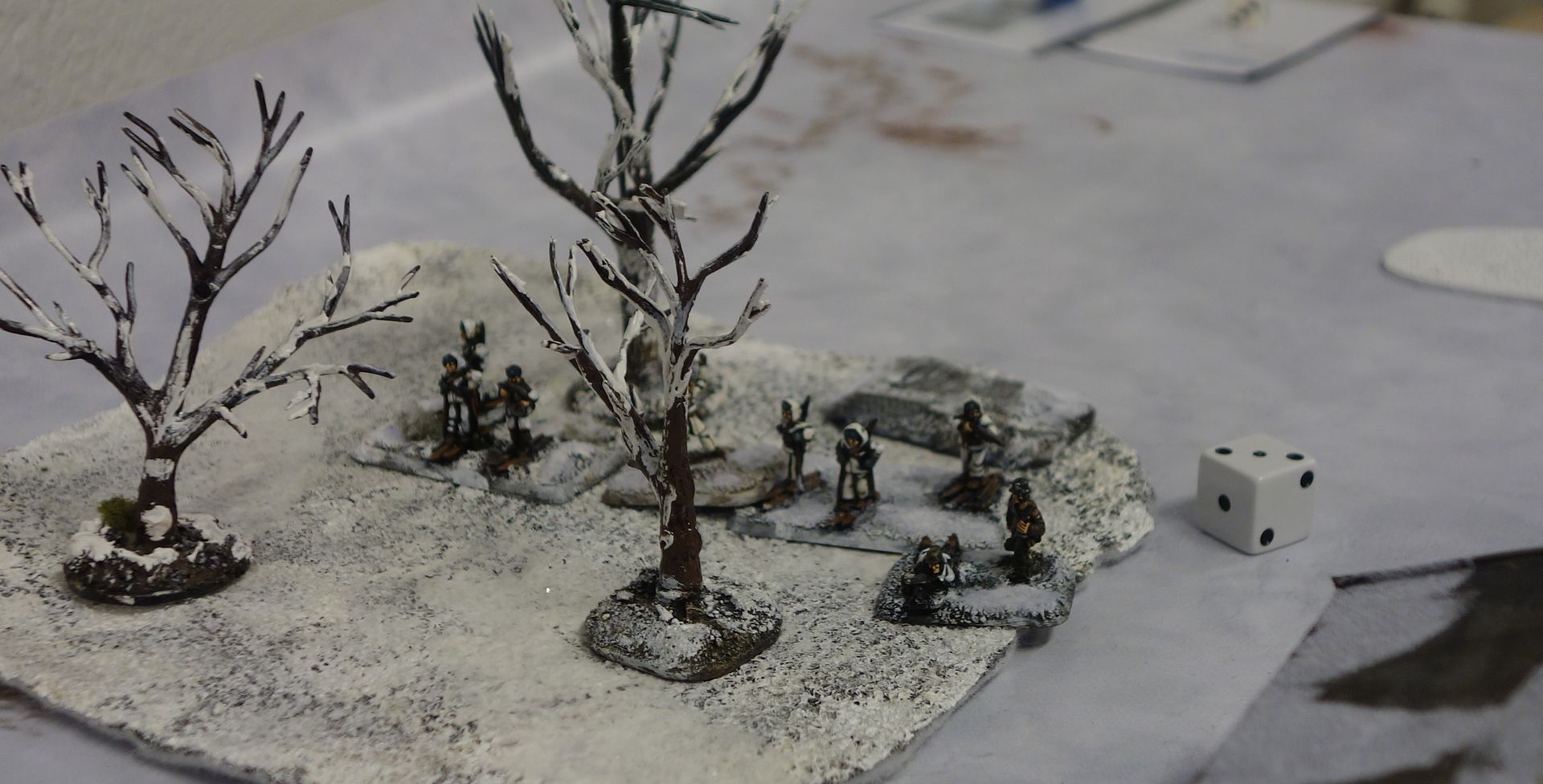
Finn infantry on the Soviet left flank on their way to try and outflank the Soviet infantry in the village

Mid Game

Around the village, the opposing infantry platoons engaged in a major firefight that saw both sides take serious losses. One of the Finn squads routed and another was severely weakened and pinned repeatedly. But at the same time, the Soviet platoon suffered just as badly and was less able to recover.
The Soviet and Finn infantry platoons engage each other in intense fire fight in and around the village

The tank fight on the Soviet right flank was very intense. The outnumbered Finn tankers managed to knock out one of the Soviet tanks, but lost one of their own (crew forced to bail out) and another lost its main armament. The Finns coninued to be unlucky in their attempts to bring all their tanks onto the table (maybe the engines had frozen solid in the winter night?), enabling the Soviets to concentrate fire on individual Finn tanks as they appeared.
The tank battle on the right flank in full swing.

Still, in CoC even light tanks can be quite resilient unless fired on by something truly awesome, like an '88'. So it took some time for the Soviets to actually destroy enough Finn tanks to make a real impact. Most often a tank has to be hit several times before it is actually destroyed. One by one, most Finn tanks were knocked out.


End Game

Eventually, the Soviet advantage in the tank fight proved overwhelming as the Finn platoon commander's tank finally fell to a storm of Soviet 45mm fire from both front and flank.
Soviet tankers surround the Finn tank commander
After that, the Finn tank platoon found it very difficult to fight as the platoon commander was no longer available and the platoon's morale had suffered badly.
The Finn tank platoon commander finally goes down after knocking out a Soviet opponent and damaging others
Finally, the armoured car was also hit and knocked out and the Finn tank platoon was forced to withdraw.
But at the same time, the Finn infantry had managed to grind down their Soviet counterparts (supported by the Finn tank that had lost its main gun, but could still fire the MG). The Finns had taken some serious losses too, but the Soviet platoon was very close to its breaking point, while the Finn infantry was still holding on.
At this point we decided to call it a draw. Both sides were very seriously weakened and we thought neither would be able to both defeat the remaining enemy and hold the village with the forces still available. It seemed reasonable for both sides to fall back to their start lines and try again another time.
So, another enjoyable game with some very tense moments.

Sunday, August 16, 2015

'Heroes of the Revolution Don't Surf' - Summer Soviets for the Karelian Campaign

No summer holiday for the heroic defenders of the revolution this year. Instead, they will all be putting their summer uniforms on and head to picturesque Karelia to take on the Finn counter-revolutionaries.

As Jeppan has already indicated on this blogg, we are painting up some Finns and Soviets to extend our Karelia Campaign for Chain of Command to summer. So we can now play Continuation War scenarios set in any season.
A couple of other club members are also doing summer Germans for the Eastern Front, so my new new summer Soviets won't be lacking opponents in other parts of the Motherland.

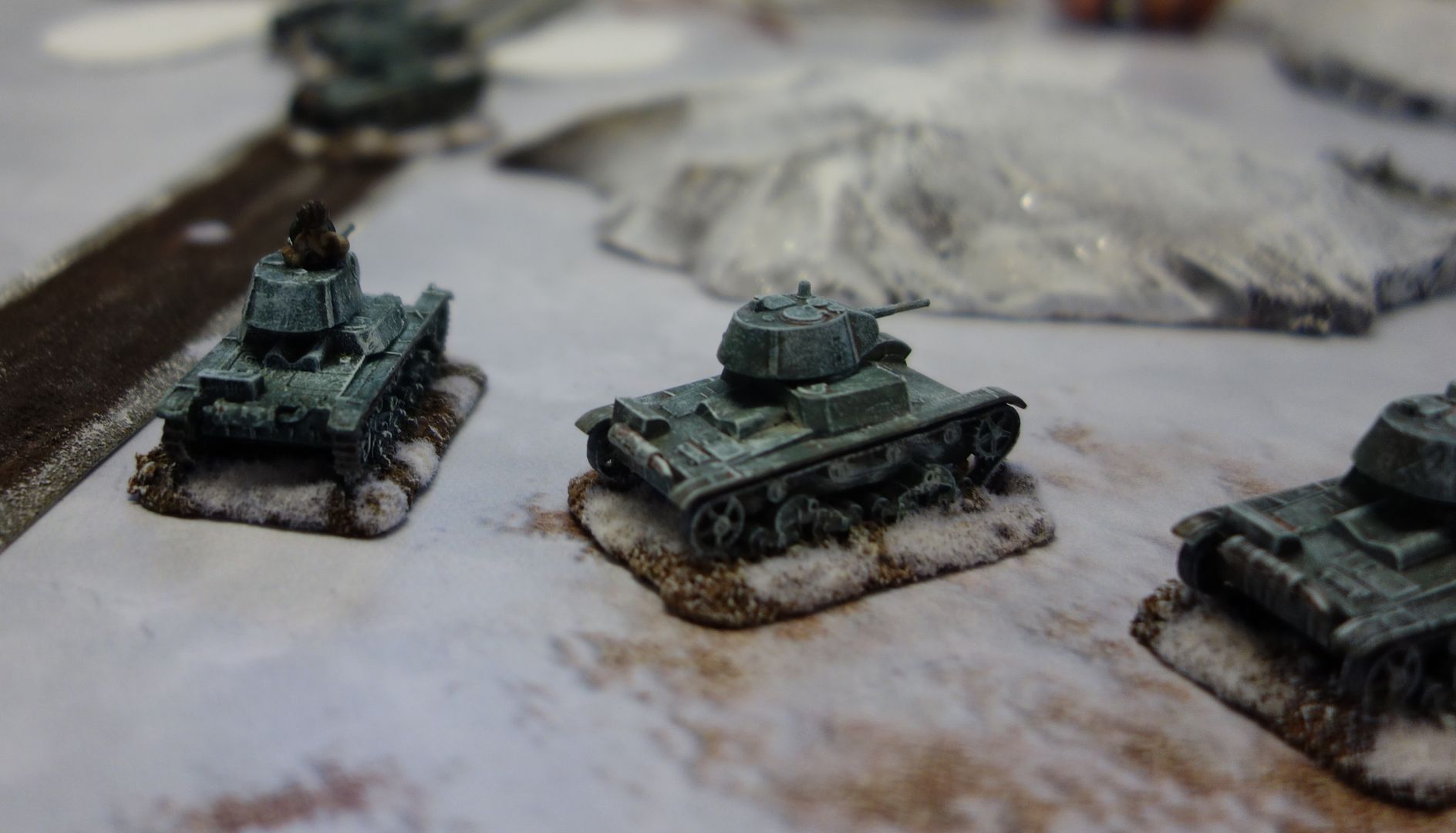
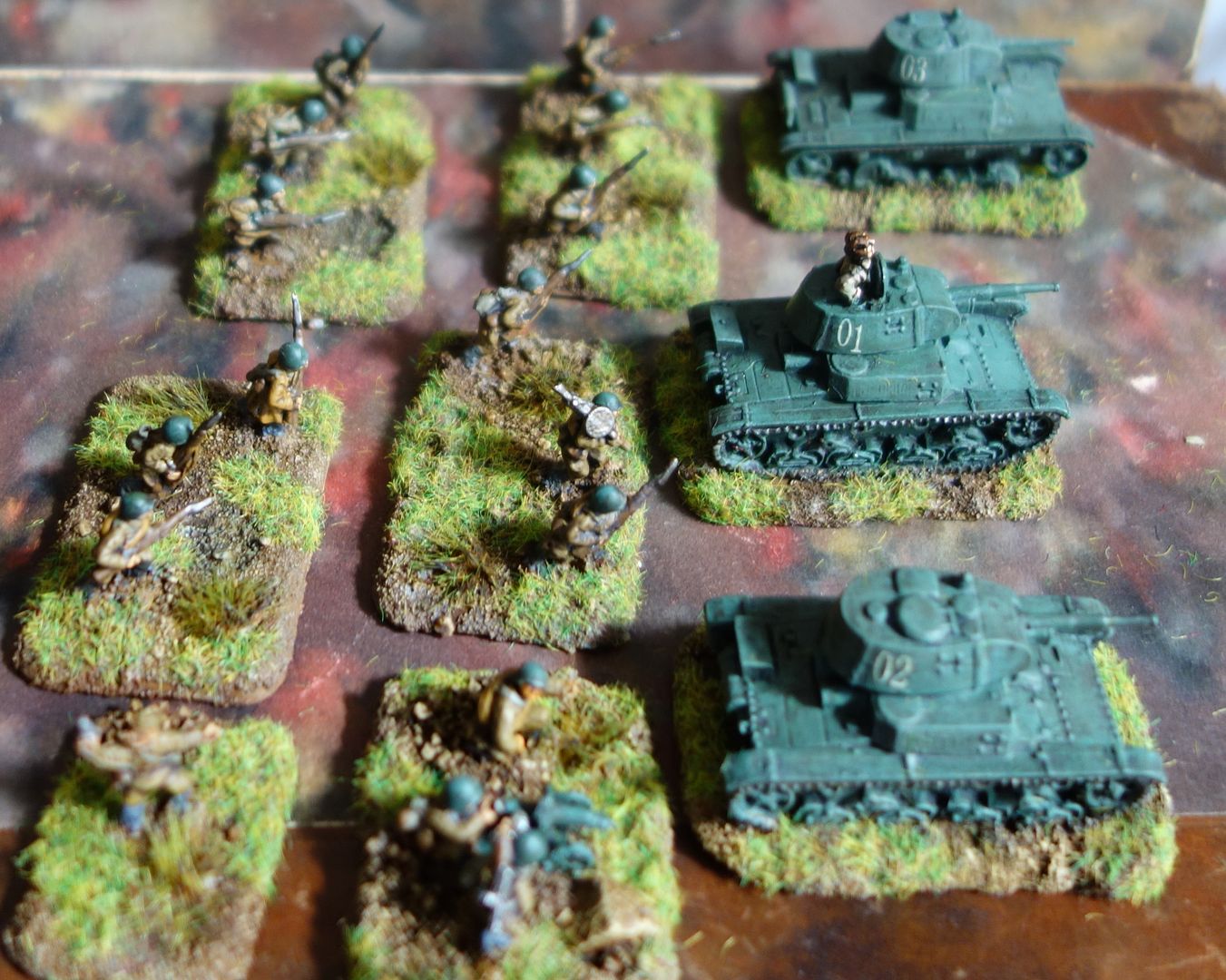
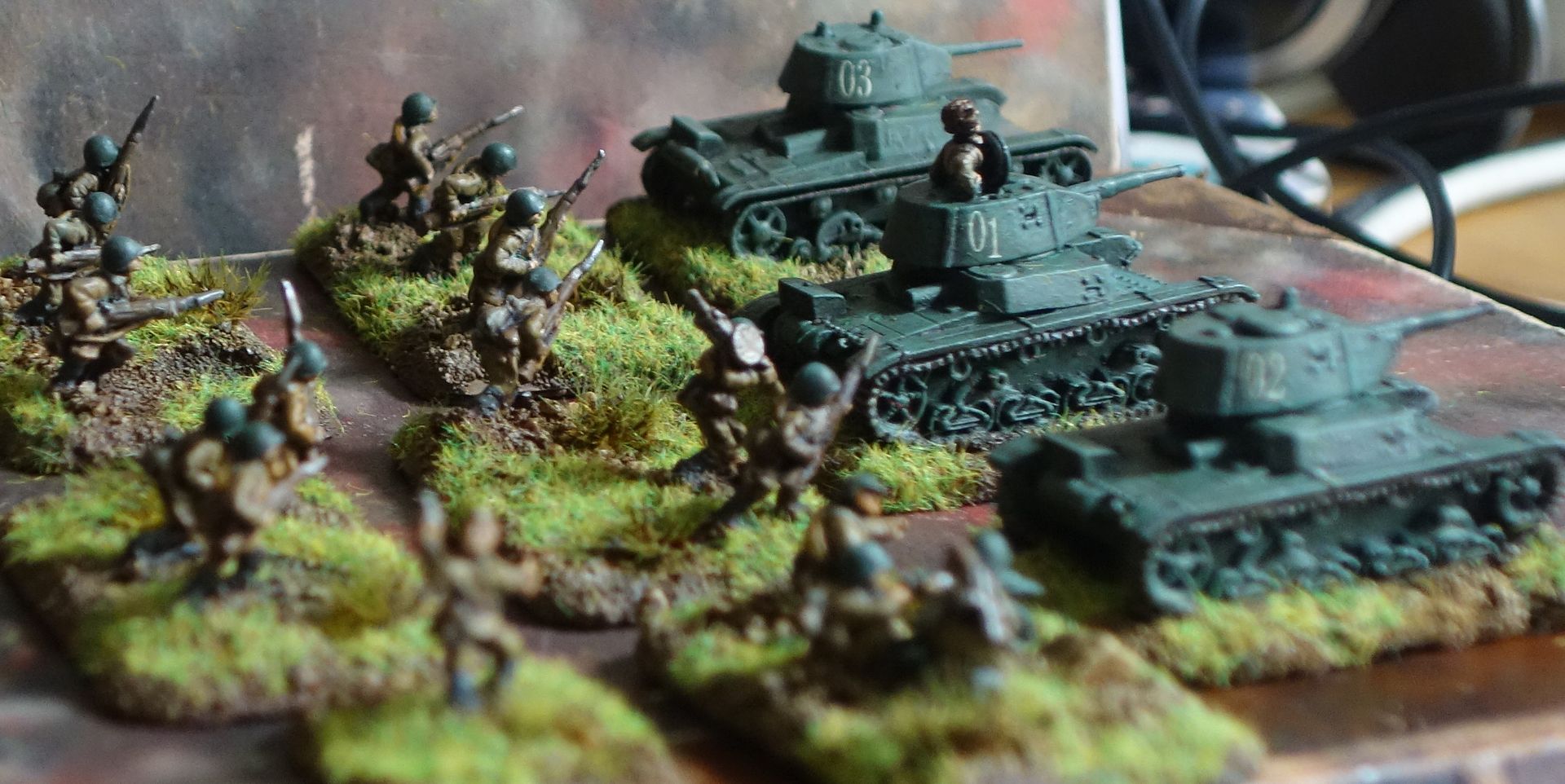
So far I've completed my Rifle Platoon, with a few options so it covers the entire period from Barbarossa to the end of the war. I've also finished a couple of Maxim MGs and a few T-26 tanks.


Infantry Squad with supporting 50mm Mortar and Maxim MG


Infantry squad and MG forming up behind the tanks....
The T-26 was used for quite some time on the Karelian and far North fronts, where one might run into these as late as '43.


Infantry squad and T-26s looking for some Fascists to fight.....
 
More tanks and support weapons will follow, and I will also add some engineers, a Recce squad or two (the extremely tough Razvedchiki) and a platoon of SMG-toting tank riding infantry.

You will be seeing more of these fellows as they make their way onto the wargames table.


Sunday, August 9, 2015

Chain of Command - WWII Finns, Summer Campaign

A Finnish section from the Continuation War(1941-1944)

This sommer I have off an on been working on some more troops for our upcoming Chain of Command games. As some of you alredy Notes we are using 15mm mintures instead of the typical 28mm. We also use multi bases.  Thus far it has worked out quite well.

We will continue the ongoing winter campaign, but we are also preparing for a Summer campaign as well. Ulf( Tabletop gamer) is working on Summer Russians and I will paint up the Finns. Well some of them were already painted when I started, but I hade to rebase them. Some hade to be painted from scratch. Able you can see a section of a Finnish platoon from the Continuation war. A typical section would consist of 8 men and an NCO. The main difference from the Winter War(39-40) was that each section(there are 4 of them in each platoon) recieves a light machine gun. It was usually a Russian 
Degtvarvo(DP for short) machine gun, with it's typical drum magazine on top. However most 
minatures manufacturers prefer to depict a machine gunner with a Lathi Saloranta instead. That was the main weapon of the Winter war, but was gradually replaced during the Contunation War. The main reason was that the DP was a better machine gun, and that the Finns had loads of them taken as war booty during the Winter War.


Here we have the entire platoon - 4 sections and two senior leaders


The senior leaders are based with two miniatures on each base in order distinguish them from the Junior leaders.

Support weapons - Maxim medium machine Guns and Lathi L-39 anti-tank rifles. The later were probably not that useful during the later part of the war, but could knock out standard tanks of the early part of the war. They were also used as long range sniping rifles and  for bunker busting.


If a player really would like to get their Finn minis to knock out pesky Russian Tanks then I suggest a couple of 75mm Pak 40.  In the real war the Finns started to use these from 1942 and onwards.


Tuesday, August 4, 2015

Back to Karelia part 2 - Captain Castroulius striktes back

We have managed to run few more games using the Chain of Command rules as well as our campaign amendments. Things are working out quite well. The campaign is afoot.....

If one look at game board the latest scenario looks quite a bit like the last one. There is a main road as well as a bridge that divides the battlefield. There is also a ford that counts as good going. We used the dice to decide the number if fords and their relative position along the river. The dice said that there was only one. 


In this game the bridge was not a objective. It is however an obstacle on the battlefield and will force the two combatants to decide how to divide their forces in the comming battle.

The Battlefield

We decided to cut down on the heavy tanks. We are running big battle Chain of Command, but we do wish to have a game of combined arms, not a Tank duel. Thus only T-26 and BT-5 were used. Finally we decided that the Russian who had the avantgarde of the river Ford would have one disadvantage. The Russians tanks would enter the field from one of the edges of the main road. Konf of player knew which side. The exact entry point would be random(using a dice to decide). The Finns on the other hand would be able to enter their T-26 from any position on the Finnish edge of the battlefield. This is a deviation from the basic CoC rulebook.  There are two reason behind this scenario feature:

A) to simulate a lack of tank and infantry coordination on the Russian side
B) to simulate the diffrence in technical reliabilty between the T-26 and the BT-5

The Choakehold - the Russians must face the Finnish Ambush before being able tu support Russian units on the other side of the River

We may or may not have exagerated the diffrences in combat effectivness between the BT-5 and the T-26, but at least the Finnish side considered the BT-5 to be mechanically a less reliable tank. 


Finns hiding behind a barn...waiting for the right opportunists to jump forth


In this game the Finnish side brought the main body of their force to the right side of the river, while the Russian tanks entered on the road from the left side. There where however some Finish infantry with anti-tank Guns in the woods near the Russian entry point. There were also a sizeable Russian infantry presence on the left side of the river. So the at the beginning of the game both side faced tanks with their infantry and vice versa. That meant that both sides needed to break through the infantry obstacle before they could face the other sides tanks.

Russians waiting for their Tank support

The Finns eventually managed to send some T-26 to support their infantry on the left side of the board. That created a choakehold. The Russian tanks were stuck on the left side and their infantry and jump-off points on the right side of the battlefield were outnumbered. Gradually this tilted the scale in order to favor the Finnish side.


A Finnish tank is brewing up....this scenario took it's toll among the AFV

 This was the first victory for the Finnish commander - a character named Captain Pentii Castroulius. He gained a new ability after this battle. He will be given a free medic to his units. From the start he was given the ability " The General's Nephew" and thus given +1 when it came to force support. The Russian side also gained a fe more abilities, but I will have to return to you about that in comming battle report.

The Russians stuck in the choakehold.....this spellt  the doom of the Russian infantry


Saturday, July 18, 2015

Back to Karelia

Last week we played another game of Big Chain of Command. This is part of our ongoing gaming in Kareila during the Continuation War between the Soviet Union and Finland. As usual I played the Soviets, while Jeppan ran the Finns.
The scenario is set in the winter '41-'42 in the forests around Petrozavodsk.
We also playtested some house rules for linked scenarios that will, hopefully, allow us to track the imaginary careers of one infantry platoon commander and one tank platoon commander on each side. More on that below.

The Table

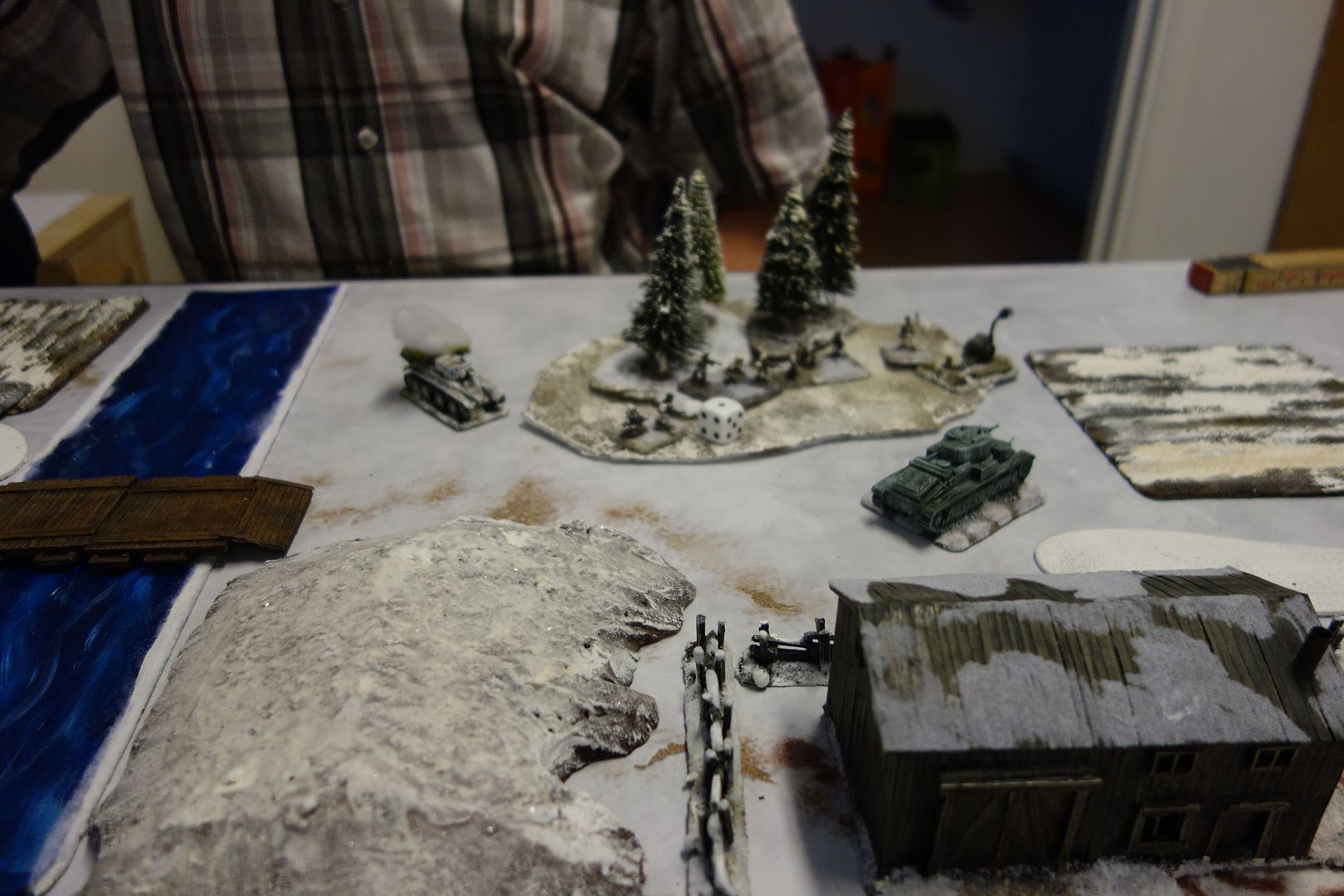
The table is a winter landscape with a river runnning between the long edges of the table. In the middle there is a bridge which is the main objective of the scenario.
There are also two other crossing points, a temporary pontoon bridge and a ford. The river is otherwise impassable.
There are some buildings forming a small sprawling village on both sides of the river by the main bridge. This is surrounded by mixed woods and a few hills.
We recently bought a new winter mat for our gaming table, and that really did make things look better.
The Table - Soviets to enter from the left, Finns from the right in this Picture


The Mission

Both sides has the same mission in this encounter scenario: capture the bridge. We place a marker in the centre of the bridge to indicate the objective. If either side captures the objective (as if capturing a Jump-off Point), both the other side's platoons suffer the effects of losing a Jump-Off Point. And that's pretty bad.....
Both sides enter from a long table edge, but may not approach any Patrol Marker closer than 12" from the bridge during the Patrol Phase.

Forces

Both sides had a platoon of infantry and a tank platoon. We decided to allocate the same Force Support, modified by platoon strength ratings, to both sides. We rolled a whopping 12 for Force Support so both sides had a very powerful force indeed.
The Finns fielded an infantry platoon supplemented by a Jääkeri squad of Elite infantry, a 45mm AT Gun, and an FAI armoured car. This was joined by a tank platoon of 2 T-28E and 2 BT-7 tanks. The Finn infantry was supplied with molotov cocktails and other charming devices to take on the Russki tankers....
The Soviet also had an Infantry platoon which was supported by one of the awesome T-34 tanks. The Soviet tank platoon had 3 T-28E tanks supported by a Regular infantry squad. All Soviet infantry squads had AT hand grenades (an early RPG-40, much less efficient than the ones used later, I've rated them AP Strike 3).


 Deployment and Opening Moves

The Soviets gained intiative, but rolled relatively poor command dice, so could only deploy a single tank and an infantry squad onto the table. Soviet command rolls did improve in later phases, though. So no complaints there.
Soviet ínfantry advance cautiously to the left of the bridge

The Soviets deployed the Infantry platoon to the left of the river, with the tank platoon on the right.
Finns were able to deploy more troops and the early game saw the Finns advancing rapidly down the middle towards the bridge with the tanks platoon and half the infantry platoon.

Finn tank platoon advances down the centre. Awesome paint job by Jeppan on these AFVs

At the same time the Soviets slowly ground forward, with little contact made on either side.

Soviet tankers are moving up to counter the Finn assault on the bridge.


The Finns boldly advanced a team onto the bridge to capture the objective just as a Soviet T-28 was lumbering onto the end of the bridge.
Both Soviet Platoons immediately lost 2 Morale. Not an auspicious start for the heroes of the proletariat.

The Finnish team was dangerously exposed on the bridge, but had done its job admirably. It then continued to impress by surviving point blank fire from several Soviet tanks before finally succumbing to sheer volume of fire.
Soviet tankers concentrate fire on the bold Finns on the bridge.

The Mad Minute

The climax of the battle saw action all across the front.
On the Soviet left flank, the Soviet infantry platoon advanced a squad onto the reverse slope of a small hill where it engaged in a drawn out duel with one of its Finn counterparts and also subjected to MG fire from the Finn FAI armoured car. This was to continue for quite some time with the Finns gradually wearing the Soviet squad down.
Soviet infantry and supporting T-34 face the fearsome Finn infantry

At the same time, the Soviet T-34/76, supported by fire from a Soviet T-28 across the river, engaged in an epic duel with both Finn T-28s while the two Finn BT-7s maneuvered to the flanks to attempt to fire on Soviet tanks' exposed flanks.

As the Soviet tank platoon lumbered onward with its supporting infantry squad, the Finns deployed a Senior Leader, an infantry squad and the Jääkeri on the Soviet right flank. The Finns are much more tactically flexible than the Soviets, which is historically correct. Here a fire fight between the Soviet infantry squad and the Finn infantry rapidly developed into a stalemate.
Soviet infantry lurk behind a house as the Finn Jääkeri come out of the tree line.

In the centre the Soviet tank platoon attempted to push one of the tanks over the bridge to support the lone T-34 and infantry platoon, but as the T-28 ground its way across the bridge, a Finn AT gun ambushed it from the nearby woods. The ensuing duel saw the tank damaged, but the AT gun crew was cut down by a hail of HE from 2 Soviet T-28s.
At roughly the same time, the Soviet T-34 scored a critical hit on the Finn tank platoon commander's T-28, which promptly blew up. This was very much the turning point in the game. Deprived of their platoon commander, the Finn tankers were much less effective, and to make matters worse the second Finn T-28 was also knocked out  slightly later.
Soviet T-34 scores critical hit on the Finn tank commander's vehicle and knocks it out.

End Game

The remaining two Finn BT-7s had maneuvered to the flanks, but the one on the Soviet left flank was knocked out by the T-34 after a remarkably long firefight. The Finn infantry in the centre was also starting to suffer from the concentrated fire of Soviet infantry and Soviet tanks that were now free to engage the Finn infantry.
One of the Soviet infantry squads was routed, but this was not enough to turn the tide.
At the same time, on the Soviet right flank, a Soviet T-28 moved to engage the Finn infantry, but was ambushed by a bunch of Finn infantry with molotov cocktails charging out of the forest, supported by fire from the last remaining Finn BT-7.
Remarkably, the T-28 proved impervious to this deluge of 45mm gunfire and molotov cocktails, and in return managed to knock out the BT-7.

´Very, very lucky Soviet T-28 knocks out BT-7 and repulses Finn infantry


In combination with some further Finn infantry losses, the Finns were forced to withdraw.
This was a very enjoyable game, and the Big CoC rules really do work very well.
Soviet tank platoon commander engage the Finn Jääkeri. It's the final straw, and the Finns are forced to withdraw


Appendix - House Rules for Character-Based Linked Scenarios.

As mentioned above, we've written some simple rules for linked scenarios. This way we will follow a couple of fictional platoon commanders as the develop during the Continuation War.

Linked Scenarios - Platoon Leader Abilities

Each Platoon Leader (PL) accumulates experience points which can be used to acquire Command Abilities.
A Platoon Leader is either an Infantry Leader or a Tank leader. An infantry leader always commands an infantry platoon (which may include AFVs if purchased as Force Support).
A Tank leader will always command a platoon of AFVs, but may also command infantry, or support weapons if purchased as Force Support.

Earning Experience Points

For each scenario a PL participates in, he gains:
- 1 XP for fighting in a  scenario
- 1 XP for surviving the scenario AND commanding a platoon which did not break
- 1 XP for fighting on the winning side

Spending Experience Points to gain Command Abilities

After a scenario, a PL may try to gain a new ability.
Roll 1D6. If the result is equal to,  or lower than, the PL's number of XPs the attempt is successful, and the PL gains a new ability, but loses all accumulated XPs.
If the die roll result is higher than the number of XPs the attempt fails, but the PL loses one of  his accumulated XPs.
A roll of 6 is always a failure.
No more than 6 XP can be accumulated.
Some Abilities are available to Infantry or Tank leaders only. Others are available to any leader.
New Abilites are assigned randomly using the Ability card deck. A PL can only acquired one instance of each Ability. Draw a new cards if the new Ability is not available for that type of PL, or if the PL already has the Ability selected.
A PL can accumulate a maximum of 3 Abilities. Once a PL has 3 Abilities he can continue to attempt to acquire new Abilities, but must discard one of the already existing ones in order to gain the new one. The new Ability can not be refused, and one of the existing Abilities must be discarded.
Alternatively, a PL who already has 3 Abilities, may spend xps to get additional Force Support in the next scenario. One extra Force Support List is received for each 2 xps spent.
 

Abilities

The following Abilities are available:
Both Infantry and Tank Leaders  

General's Nephew - The PL has good personal connections and can usually get more support than normal.
The PL's platoon receives 1 extra FSP during force selection. (Infantry & Tank Leaders)

Parade Ground Voice - The PL has a knack for communicating even in the midst of battle.
The PL has a command range of 15" instead of 12".  (Infantry & Tank Leaders)
Double Time! - The PL is very good at getting his troops to move fast.
The PL may use 2 commands to issue a move order. If he does so, the ordered unit moves +1" per die, but may not enter close combat or perform overruns. (Infantry & Tank Leaders)
Semper Paratus - The PL is skilled in getting his units into superior firing positions quickly.
The PL may use 2 orders to have 1 squad or team move 1 or 2 dice and assume Overwatch at the end of movement. (Infantry & Tank Leaders)
One Step Ahead - The PL prepares thoroughly for every mission.
The PL's platoon starts the game with 3 Points of a Chain of Command Die already accumulated. (Infantry & Tank Leaders)
Bring 'em Forward! - The PL has a trusted companion who assists him in getting his platoon deployed.
The PL's platoon always receives an Adjutant.  (Infantry & Tank Leaders)

 .
Infantry Leaders only

Up Close and Personal - The PL can get his troops into close combat very quickly and effectively.
The PL may use 2 commands to issue a move order into close combat. If he does so, the assaulting unit's target cannot benefit from the 1D6/die for enemy move into close combat. (Infantry Leaders only)

Technical know-how - The PL has extensive technical knowledge
One of the squads in the PL's platoon is upgraded to Assault Engineer, and may choose any one Engineer ability (except Flame Thrower) in each scenario.
If Demolition is chosen, the squad has 1 Demolition Charge. It can also be used against AFVs with AP strike 5.
If Wire Cutting or Mine Clearance are selected, the squad is issued with enough equipment to clear 2 such obstacles. (Infantry Leaders only)
I Like Heavy Metal - The PL has trained his men in the art of attacking tanks with improvised explosive devices and molotov cocktails, which they are very good at making themselves.
One of the squads in the PL's platoon is automatically issued with 2 expertly made improvised anti-tank grenades. AP strike 5. (Infantry Leaders only)
Medic! - The PL is accompanied by a skilled medic.
The PL's platoon is automatically assigned a Medical Orderly. (Infantry Leaders only)
Lock & Load! - The PL is good at deploying his men in good positions.
All units in the PL's platoon may assume Overwatch when deployed. (Infantry Leaders only)

Tank Leaders only

Marksman - The PL and the gunner of his tank make a very good team that tends to hit the weak spots on enemy AFVs. If the PL's own AFV (no other tank in his platoon may benefit from this) is firing from a stationary position it has a better chance of scoring a critical hit.
At ranges up to 12" a critical hit is scored on to hit-roll of 10-12.
At ranges longer than 12"s a critical hit is scored on to hit-roll of 11 or 12.
(Tank Leaders only)

Mechanical Wizard - The PL is a very good mechanic and able to keep his vehicles in top-notch condition.
AFVs in the PL's platoon may enter the table off-road, even if unreliable. (Tank Leaders only)
Hand Me More Duct Tape! - The PL's platoon is very good at repairing damaged vehicles under battle conditions.
The PL may use 2 orders to attempt to repair any damaged vehicle in his platoon. Attempt succeeds on a roll of 4-6 on 1D6. (Tank Leaders only)
Fire and Movement -- The PL has trained the crews in his unit to aim their guns very quickly.
All AFVs in the PL's platoon may fire at enemy AFVs after moving without penalty if given 2 orders to do so by either the PL or the Junior Leader of their own AFV. (Tank Leaders only)
Ace Gunner - The gunner on the PL's tank is an expert.
The PL's tank has a +1 bonus to hit other AFVs. Only the PL's own tank can benefit from this ability. (Tank Leaders only)


Wednesday, July 8, 2015

The Fyn Infantry Regiment 1710.....and some Pulp Minis

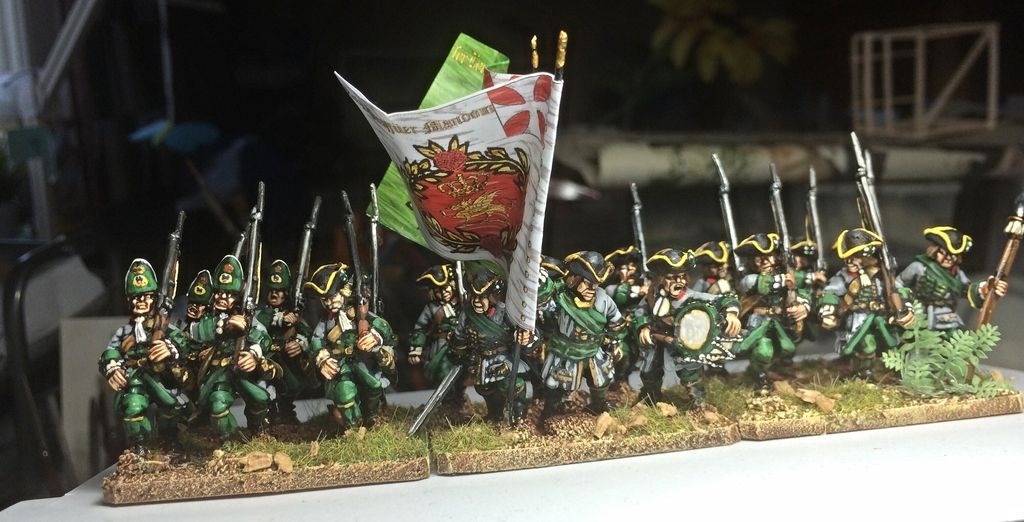
The Fyn Infantry Regiment 1710

New minis finished!  First we have one more unit for the Great Northen War. The unit in question is the Danish  Fyn Infantry Regiment. Just like the unit in the last blog entry The Fyn Infantry Regiment unit took part in the battle of Helsingborg 1710...and just like the previously Jutland Infantry Regiment this unit was an Imperial unit - it was rented out to the German Empire during the War of the Spanish Succession. The Danes were obliged to so due to the terms set by the peace treaty of Traventhal. Thus the Fyn Infantry Regiment was present at the battle of Blenheim 1704 the most famous battle of that war. The minis are from Reiver Miniatures. The flags are bought from Maverick Models

Pulp Era Action 

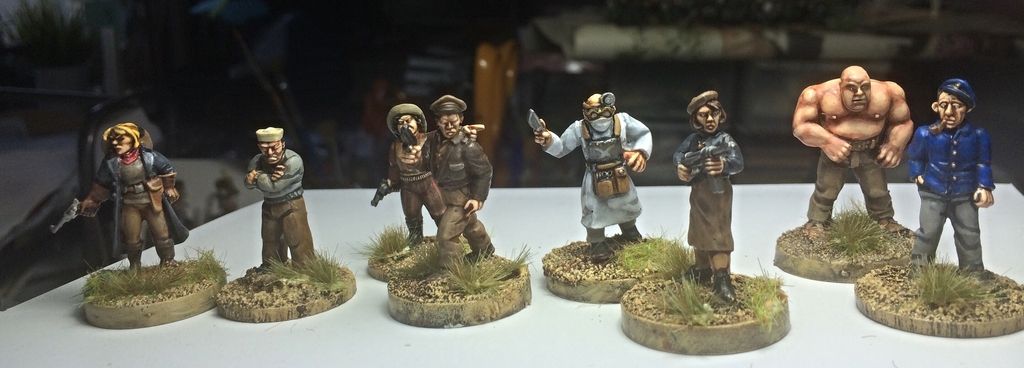
The second batch of finished minis cosists of miniatures from Pulp Figures. I do enjoy Pulp gaming. The best rules for this type of gaming is probably the ruleset known as " Pulp Alley". 
Currently we are running a Pulp Alley campaign at our club. The campaign is called "Perlious Island".  It is has been written by the same author who has written the orginal rules. Both the rules and the Perlious Island campaign supplement can be bought at the official Pulp Alley Website.

Heroes and Bad Guys from the Pulp Era(1920s-1930s)

If you want some battle reports or more insights into what this game is all about then I suggest you visit the following blog. Here one of my club compatriots, Joakim, have recorded the latest Pulp
Alley gaming sessions. I am by the way the one running the Belgian legue.